EX1
Toward the Everything Workspace
Abstract
Modern computing environments are increasingly fragmented across disconnected applications, isolated workflows, temporary context windows, and incompatible operational surfaces.
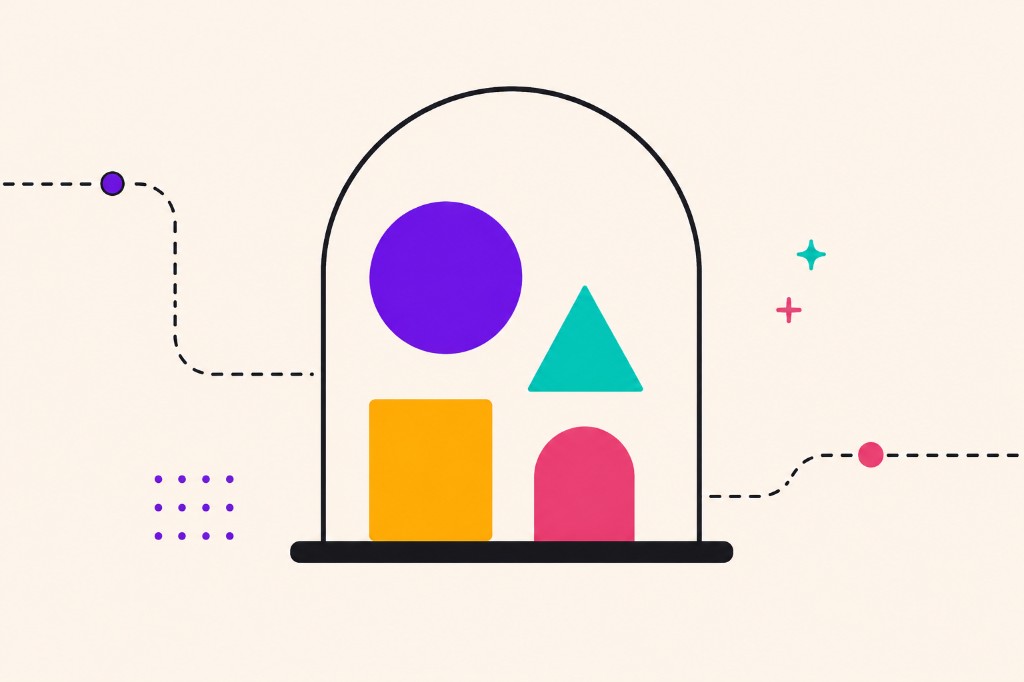
This paper introduces the concept of the everything workspace: a unified operational environment where humans, agents, tools, memory systems, execution surfaces, and contextual state coexist within a persistent computational runtime.
We argue that the future of computing will not be defined by isolated applications, but by operational workspaces capable of maintaining continuity across reasoning, execution, collaboration, and environment state.
Research Disclaimer
This publication describes conceptual research directions, runtime theories, governance models, and experimental systems architecture under investigation at Deep Bound Research Lab.
Operational implementation details, production infrastructure, orchestration semantics, runtime governance mechanisms, safety systems, and deployment architectures are intentionally abstracted or omitted from public publication.
“The workspace becomes the runtime.”
“Humans increasingly become the integration layer between disconnected systems.”
1. The Collapse of Application-Centric Computing
Modern knowledge work is distributed across dozens of disconnected systems:
- —messaging platforms
- —documents
- —terminals
- —browsers
- —dashboards
- —repositories
- —project managers
- —execution environments
- —Each system stores partial operational truth. The result is fragmentation.
1.1 Context Switching as Computational Friction
Knowledge workers increasingly spend substantial cognitive effort reconstructing context across tools. Operational state becomes fragmented across:
- —tabs
- —windows
- —chats
- —documents
- —notifications
- —repositories
This fragmentation produces:
- —cognitive overhead
- —environmental drift
- —duplicated work
- —coordination failure
Modern software optimizes for application specialization while degrading operational continuity.
1.2 Software as Isolated Islands
Traditional applications assume bounded workflows, isolated state, and narrow operational responsibility. However, real-world operational work is cross-system by nature.
A single operational task may involve:
- —code
- —research
- —messaging
- —planning
- —deployment
- —review
- —evidence
- —approvals
Current software ecosystems force users to manually bridge these systems. Humans become the integration layer.
1.3 The Failure of Temporary Interfaces
Most modern interfaces are fundamentally temporary. Chat systems lose continuity. Documents become stale snapshots. Tabs disappear. Execution traces vanish. Operational memory becomes dependent on human reconstruction rather than environmental persistence. The result is fragile coordination between humans, tools, agents, and systems.
2. The Workspace as Runtime
We propose a different model: the workspace becomes the runtime. Rather than applications serving as isolated operational silos, the workspace itself becomes the primary computational environment.
2.1 Persistent Operational Environments
A workspace is not merely a UI, a dashboard, or a document surface. It is an evolving operational environment containing:
- —contextual state
- —memory
- —execution history
- —environmental topology
- —collaborative activity
- —active objectives
- —The workspace persists beyond individual sessions.
2.2 Environmental Computing
In application-centric computing, software contains the work. In workspace-native computing, the environment contains the work. Operational state no longer belongs exclusively to applications — it belongs to the environment itself. The environment becomes aware of ongoing activity, operational history, contextual relationships, and execution state.
2.3 From Files to Operational Surfaces
Traditional systems organize around files, folders, and documents. Operational systems increasingly organize around:
- —active environments
- —evolving contexts
- —persistent state surfaces
- —execution-linked artifacts
This transforms the workspace into a computational surface, a coordination environment, an operational runtime.
3. Human–Agent Co-Operation
As AI systems become operational participants rather than isolated assistants, the workspace must support collaborative intelligence between humans and agents.
3.1 Agents as Workspace Participants
Most current agents operate as external utilities, detached copilots, or isolated chat interfaces. Future systems increasingly require agents embedded directly within operational environments.
These agents participate in:
- —execution
- —coordination
- —retrieval
- —planning
- —monitoring
- —environment interaction
- —The agent becomes part of the workspace ecology.
3.2 Sidecar Operational Intelligence
Future workspaces may support multiple concurrent agents with specialized operational roles:
- —research agents
- —execution agents
- —monitoring agents
- —planning agents
- —coordination agents
Importantly: not all agents should possess equal authority, not all agents should access all systems, not all agents should operate autonomously. Workspace-native systems require governance-aware collaboration models.
3.3 Human Oversight as Infrastructure
Autonomy without visibility degrades trust. Operational workspaces therefore require:
- —execution visibility
- —approval routing
- —action traceability
- —evidence linkage
- —interruptibility
The objective is not invisible automation. The objective is governed operational acceleration.
4. Tool Execution as First-Class Infrastructure
Most current systems treat tool execution as hidden implementation detail. We argue tool execution should become a visible operational primitive.
4.1 The Invisible Execution Problem
Modern AI systems increasingly invoke:
- —terminals
- —APIs
- —browsers
- —databases
- —repositories
- —deployment systems
Yet users often cannot observe why actions occurred, what changed, what tools were invoked, or what assumptions were made. This creates operational opacity.
4.2 Execution Envelopes
Future systems may increasingly expose execution through structured operational envelopes:
- —execution intent
- —active status
- —resource usage
- —evidence outputs
- —approval requirements
- —failure state
This transforms execution from hidden machinery into observable operational behavior.
4.3 Operational Provenance
Operational systems increasingly require:
- —artifact lineage
- —execution traceability
- —temporal reconstruction
- —action provenance
The workspace becomes partially executable, partially auditable, partially replayable.
5. Persistent Operational Context
The most important property of future workspaces may be continuity.
5.1 Context as Environmental State
Current systems repeatedly reconstruct context through prompts, documents, chat history, and retrieval. Operational environments instead maintain:
- —evolving environmental memory
- —active objectives
- —historical continuity
- —contextual topology
- —The environment itself becomes context-bearing.
5.2 Temporal Operational Memory
Workspaces increasingly require awareness of what changed, when it changed, why it changed, who changed it, and what remains unresolved. This creates temporal operational continuity. The workspace evolves into a living operational record rather than a static interface.
5.3 Workspace Memory
Persistent workspaces may eventually support:
- —environmental memory
- —semantic persistence
- —operational replay
- —longitudinal reasoning
This shifts computing away from isolated interactions toward evolving computational environments.
6. Toward Unified Operational Computing
The boundaries between IDEs, operating systems, collaboration platforms, agent runtimes, and execution environments are beginning to dissolve. We believe future computational systems will increasingly converge toward unified operational environments where execution, memory, collaboration, reasoning, governance, tooling, and environment state operate within a single persistent workspace runtime.
6.1 Beyond Applications
Applications are likely not disappearing. However, they may become subordinate operational modules within larger workspace environments. The workspace becomes the primary surface of computation.
6.2 Agent-Native Computing
As agents become persistent operational participants, interfaces change, workflows change, and governance changes. Execution visibility becomes essential.
Future workspaces will increasingly be designed around:
- —human–agent coexistence
- —operational continuity
- —governed execution
- —persistent context
6.3 The Everything Workspace
The everything workspace is not a single application, a chat interface, or a productivity dashboard. It is a persistent operational environment capable of unifying human reasoning, machine intelligence, execution systems, memory, and collaboration inside a shared computational runtime.
Conclusion
Modern software ecosystems are optimized for isolated applications rather than operational continuity. As AI systems become increasingly capable, this fragmentation becomes a structural bottleneck. The future of computing may not revolve around larger applications, more tabs, more integrations, or more disconnected interfaces. Instead, it may converge toward persistent operational workspaces where humans, agents, memory, execution, governance, and collaboration coexist within unified computational environments. The future operating system may not be an application launcher. It may be the workspace itself.
Citation Reference
DBRL-RR-2026-002
Deep Bound Research Labs · February 17, 2026